
Locked In at 2–3%: Should You Sell or Keep Existing Home When Upsizing?
Moving up from a condo bought at 2-3%: the monthly cash flow if you keep it as a rental versus selling it and putting the equity into the new home.
 Daniel JangJang Properties | RE/MAX NOW
First published on my earlier blog in April 2026. Rates, prices and listings may have changed since.
Your 2~3% Rate Home — Is It Really "Never Sell" Territory?
A cash flow analysis every low-mortgage homeowner needs to read before making their next move
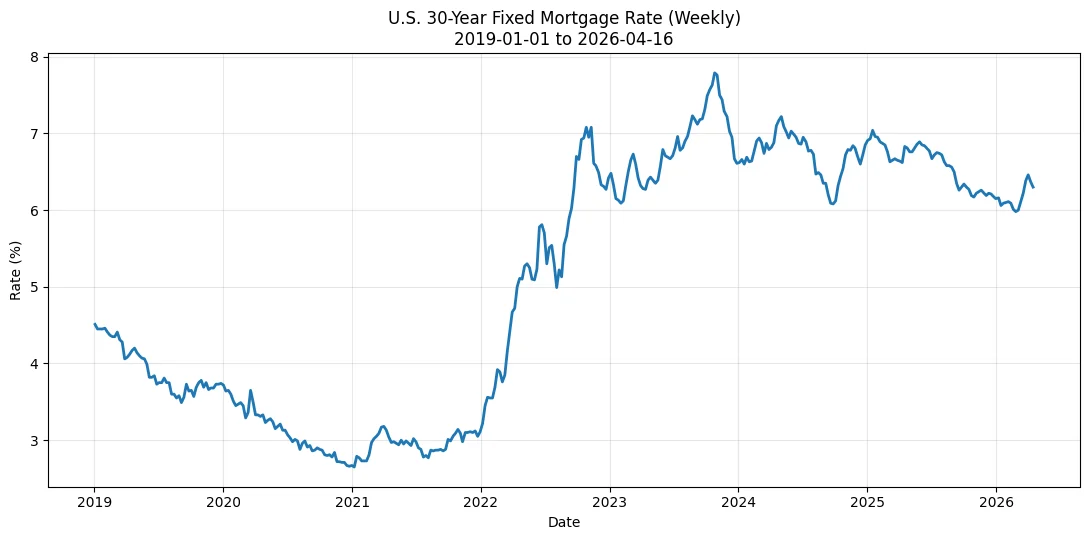
If you bought a home in 2020 or 2021, you're sitting on something increasingly rare: a sub-3% mortgage. With today's rates hovering around 6.5–7%, that locked-in rate feels like a trophy you can't afford to give up.
But life moves forward. Kids arrive, families grow, and the condo that felt perfect four years ago is now bursting at the seams. You're thinking about upsizing — a bigger house, a better school district, a backyard. And that's when the question hits:
"Do I sell my current place, or rent it out and buy the new home on top of it?" The low rate feels too valuable to walk away from. But carrying two mortgages feels like a stretch. Both instincts are valid — which is exactly why this decision deserves a proper numbers-based analysis.
Today I'm going to walk through both scenarios side by side, so you can see exactly what each path actually costs — and what it buys you.
Meet Ethan: A Typical Upsizing Scenario
Ethan bought a 2-bedroom condo in 2021 for $450,000 at a 2.5% rate. Five years later, his family has grown and he's eyeing a $1M single-family home in Hudson or Bergen County. His current condo has appreciated and he's built up meaningful equity — but now he faces the decision.
▸ Ethan's Current Property Snapshot
Current Value
$620K
Equity
~$303K
Cash Savings
$200K
Monthly Mortgage
$1,422
HOA + Tax + Insurance
$1,839
Goal: Upsize to a $1M single-family home. Should he sell the condo or rent it out and keep the 2.5% rate?
The Two Scenarios, Head to Head
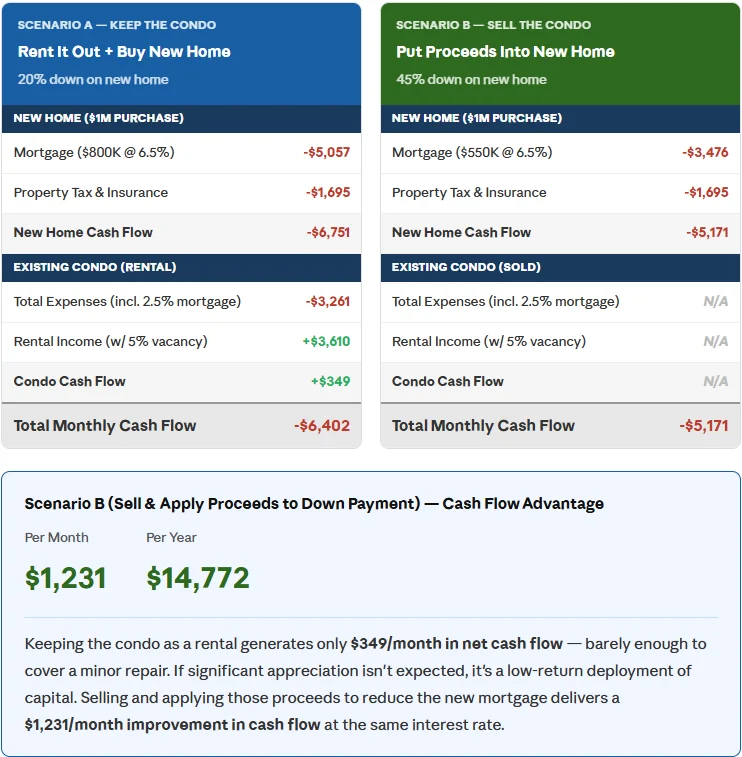
Both scenarios use a 6.5% rate on the new purchase. The only difference is what happens to the existing condo — and it has a significant impact on monthly cash flow.
So Selling the existing home (Scenario B) always the Right Answer?
Not necessarily. Cash flow comparison is one of the important aspects when making deicion, but it doesn't capture the full picture. Here's how to think about each path based on your priorities:
If you expect strong appreciation on the existing condo → Keep (Scenario A) may be worth it
Holding two properties means two assets building equity simultaneously, with leverage amplifying gains in a rising market. If the condo's neighborhood has strong upside ahead, the additional $1,231/month could generate outsized long-term wealth. The trade-off: the moment you move out, your condo becomes an investment property whether you planned for it or not. That means tenant management, maintenance, vacancy, and landlord responsibilities on top of settling into your new home.
If cash flow efficiency and simplicity matter most → Sell (Scenario B) is the cleaner path
If you want stable monthly cash flow and prefer to focus on your new home without landlord responsibilities, Scenario B is the right call. If long-term appreciation on the condo is unlikely to be significant, that makes the case for B even stronger. Condos tend to appreciate more slowly than single-family homes over time, which limits the upside of holding.
The Question That Decides Everything
"Is it worth paying an extra $1,231 per month and taking on the responsibilities of a landlord? — in exchange for keeping the condo as an investment asset?" Your income structure, cash reserves, and long-term goals will determine the right answer. Neither path is wrong. What matters is making the decision deliberately, with the numbers in front of you.
Ethan's numbers are one example. Your situation will look different based on your property's current value, your rate, the price of your target home, and your income. The analysis framework, however, is the same — and it's the kind of calculation I run with every client before they make a move.
Your Strategic Partner for Every Step of Real Estate Journey — From Analysis to Closing
With $3.5B+ in institutional real estate transaction experience, I bring an investment-grade analytical framework to residential decisions. Whether you're weighing a sell vs. hold decision, navigating an upsizing purchase, or even rent vs buy decision — I'll help you make the right call with clarity and confidence, and stay with you through every step of the process.
Assumptions & Disclaimer
- Cash flow analysis limitations: This analysis reflects first-month cash flow only. It does not account for principal paydown, property appreciation, or tax benefits. These factors can significantly affect the true return of each scenario and should be considered in any complete financial analysis.
- IRR perspective: Depending on the condo's annual appreciation rate and holding period, Scenario A may be more advantageous from a total return (IRR) standpoint. Long-term wealth building strategy should be evaluated separately based on individual circumstances.
- Scenario A assumptions: New home purchased at $1M with 20% down ($200K), resulting in an $800K mortgage at 6.5% (30-year fixed). Rental income on existing condo: $3,800/month gross based on Fort Lee 2BR market rent, with 5% vacancy deduction applied. Total condo expenses include existing 2.5% mortgage ($1,422/mo) + HOA, property tax, and insurance ($1,839/mo).
- Scenario B assumptions: Condo sold at $620K. After approximately 6% in selling costs (In New Jersey commissions are negotiable.), net proceeds estimated at ~$265,800. Conservatively rounded to $250K additional cash. New home closing costs are separate. Combined with $200K in savings, total down payment = $450K (45%). Resulting mortgage: $550K at 6.5% (30-year fixed).
- Tax considerations: Rental income is taxable. Deductions such as mortgage interest and depreciation may offset taxable income — but these effects are not reflected in this analysis. Consult a CPA for tax-adjusted projections.
- Interest rate: 6.5% assumed based on April 2026 market conditions. Actual rates will vary based on down payment size, credit score, and market conditions at time of application.
- This content is for informational purposes only and does not constitute financial, legal, or tax advice. All real estate decisions should be made in consultation with a mortgage advisor, CPA, and real estate attorney.
More insights
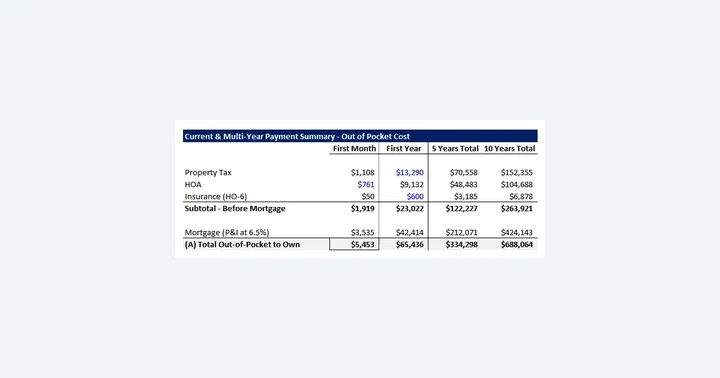
Rent at $3,700, Own at $5,453 — Is Jersey City Condo Really Worth Buying Now?
A real Jersey City one-bedroom listing (April 2026): $3,700 rent against $5,453 to own, run over 10 years with tax deductions, principal paydown, appreciation and opportunity cost.Read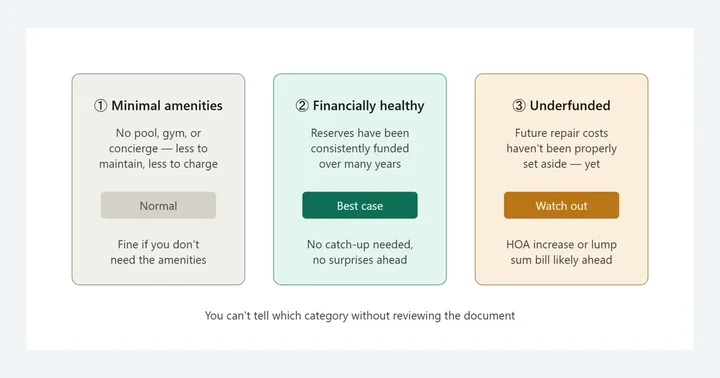
Got Hit With an HOA Surprise After Buying a Condo in NJ? Here's Why — Reserve Studies Explained
Why a low HOA can be a warning sign, how New Jersey's reserve study law is pushing fees and special assessments up, and the documents to ask for before you sign.Read
Manhattan Views. Half the Price. Why Weehawken Waterfront Condos Are the Smart Buy on the Hudson in 2026
Weehawken's waterfront condos: location, the ferry commute, the main buildings and April 2026 price ranges, compared with Hoboken and Hudson Yards.Read