
Got Hit With an HOA Surprise After Buying a Condo in NJ? Here's Why — Reserve Studies Explained
Why a low HOA can be a warning sign, how New Jersey's reserve study law is pushing fees and special assessments up, and the documents to ask for before you sign.
 Daniel JangJang Properties | RE/MAX NOW
First published on my earlier blog in April 2026. Rates, prices and listings may have changed since.
When you're shopping for a condo in New Jersey, HOA fees vary dramatically from building to building. Similar location, similar size — one charges $400 a month, another $1,200. Naturally, the lower number looks more attractive.
But a low HOA doesn't always mean a better building. In some cases, it's actually a warning sign.
Right now, in 2025 and 2026, HOA fees are rising across condos in New Jersey. Some buildings have already adjusted. Others haven't — yet. If you buy into one of those buildings without understanding why the HOA is still low, you could be walking into a bill you didn't see coming.
Here's what's happening, why it matters, and what to check before you sign.
1. Three reasons a condo's HOA might be low
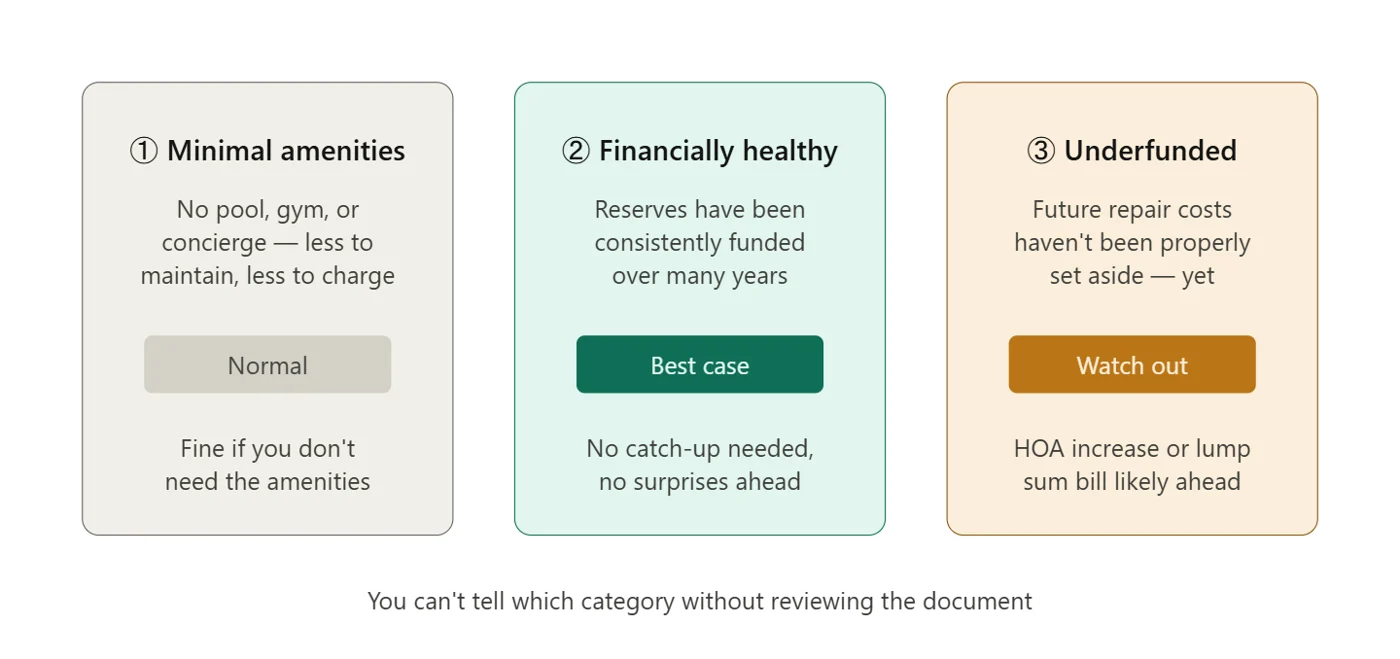
When you see a low HOA, there are three possible explanations.
① Minimal Amenities
No pool, no fitness center, no concierge, no rooftop. Less to maintain means less to charge. This is completely normal — if you don't need the amenities, it's actually the more efficient choice.
② A financially healthy building
The association has been consistently funding its reserves for years. There's already enough set aside to cover future repairs without needing to collect more each month. This is the ideal scenario.
③ A building that hasn't been setting money aside
The HOA has been kept artificially low — not because the building is lean or well-funded, but because the board never properly prepared for future repair costs. This is where the risk lies. At some point, the bill comes due.
The problem: you can't tell which category a building falls into just by looking at the monthly fee. You need to see the documents.
2. What is a reserve fund?
Every condo building has components that will eventually need to be repaired or replaced. Roofs. Elevators. Exterior walls. Plumbing. Parking structures. Pool systems. These things have lifespans — a roof typically lasts 20 to 30 years, elevators 20 to 25, exterior waterproofing 10 to 15.
When those costs come due, they're not small. Depending on the building, you're looking at hundreds of thousands — sometimes millions — of dollars.
A reserve fund is the account where the association sets aside money each month to cover these future costs. Part of your HOA payment is supposed to go here. If it's been properly funded, a roof replacement doesn't require emergency action. If it hasn't — that's when owners get surprised.
Until recently, New Jersey had no law requiring buildings to fund reserves at all.
3. The law changed in 2024
In January 2024, Governor Phil Murphy signed S2760/A4384 into law. It was updated and strengthened again in August 2025 with S3992.
The core requirement: every condo association and HOA in New Jersey must now complete a reserve study — a formal assessment conducted by a licensed engineer or certified Reserve Specialist that calculates the cost and timeline for replacing every major building component, and produces a 30-year funding plan.
Associations are required to fund reserves according to that plan. The law sets 100% of the recommended contribution as the standard. Buildings that can't immediately meet that threshold may temporarily fund at 85% — but only if they formally disclose the shortfall and notify all current owners and prospective buyers of any anticipated special assessment.
January 8, 2025 was the initial compliance deadline for existing associations.
That's why HOAs are going up right now. Buildings that have been underfunding for years are being forced to catch up. And buildings that haven't yet reflected the results in their fees — will.
4. HOA increase vs. special assessment — which is worse?
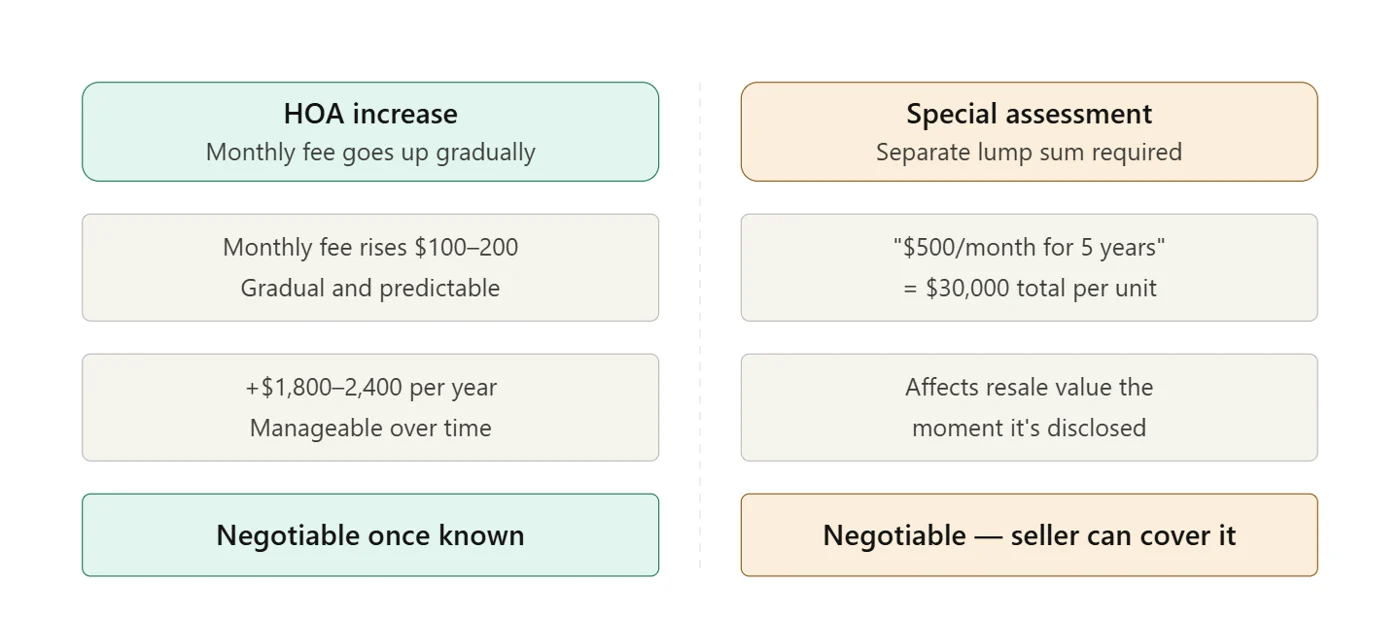
When an underfunded building has to make up the shortfall, it typically goes one of two ways.
HOA increase
Monthly fees go up. A $150 increase means $1,800 more per year. Inconvenient, but predictable and manageable over time.
Special assessment
This is the more disruptive scenario. Instead of a gradual increase, the board issues a lump-sum notice: "We need $X per unit — payable in a lump sum or over the next five years."
For example: $500/month over 60 months = $30,000 per unit.
The moment that figure becomes public, it affects the market value of units in that building. A buyer looking at that condo now has an additional $30,000 in known costs to factor in.
5. A building with a disclosed special assessment isn't automatically a deal-breaker
Here's the part most people miss.
If a special assessment has already been disclosed, the number is on the table. That means it's negotiable. You can ask the seller to credit you the full amount at closing, reduce the price accordingly, or cover the assessment directly. A known liability can be priced into the deal.
The real danger is the building where the reserve study has been completed but the results haven't been reflected in the HOA yet — and no special assessment has been formally announced. The fee looks normal. Nothing seems off. But the adjustment is coming.
That's a hidden liability. By the time you find out, you've already closed.
6. What to check before you sign
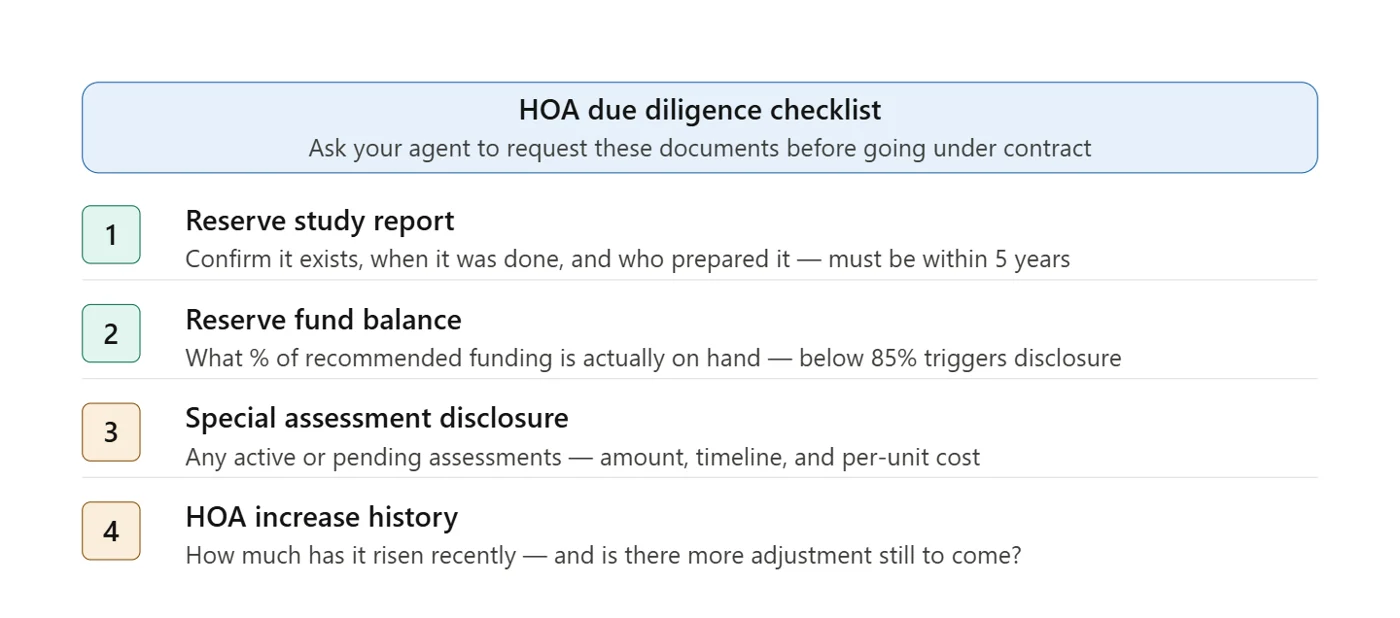
Real Estate Agent should request/check the following documents before you go under contract on any condo:
- Reserve study report Confirm it exists, when it was completed, and who prepared it. Under NJ law, it must be updated every five years and conducted by a qualified professional.
- Reserve fund balance Ask what percentage of the recommended contribution has actually been funded. If the board has elected the 85% temporary option, they are legally required to disclose this — along with the anticipated year and amount of any special assessment.
- Special assessment disclosure Is there an active or pending special assessment? What's the amount, timeline, and per-unit cost?
- Recent HOA increase history Has the fee increased significantly in the past few years? If so, was it driven by reserve funding requirements — and is there more to come?
These documents don't always surface on their own. Your agent and attorney ask the seller's side for them during the contract.
Final thoughts
A low HOA is not a selling point on its own. What matters is why it's low — and whether the building has been financially responsible about preparing for the future.
A disclosed special assessment isn't automatically a dealbreaker. Once the number is known, it can be negotiated. What you can't negotiate is a liability you didn't know existed until after you closed.
If you're evaluating a condo in Bergen or Hudson County and want someone to go through the HOA documents with you — that's exactly the kind of analysis I do.
More insights
Locked In at 2–3%: Should You Sell or Keep Existing Home When Upsizing?
Moving up from a condo bought at 2-3%: the monthly cash flow if you keep it as a rental versus selling it and putting the equity into the new home.Read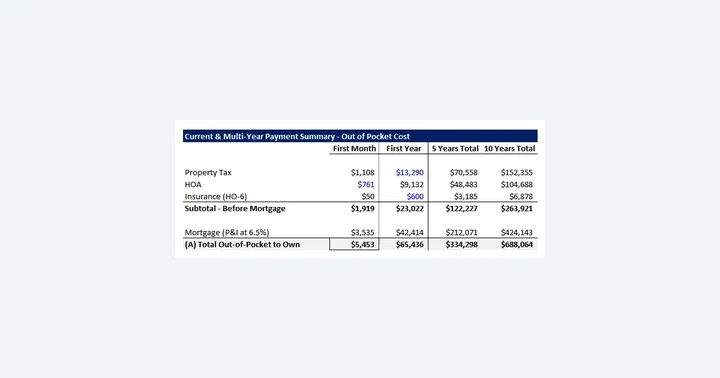
Rent at $3,700, Own at $5,453 — Is Jersey City Condo Really Worth Buying Now?
A real Jersey City one-bedroom listing (April 2026): $3,700 rent against $5,453 to own, run over 10 years with tax deductions, principal paydown, appreciation and opportunity cost.Read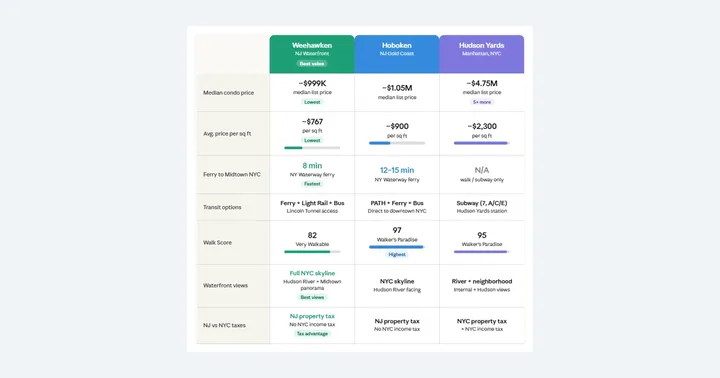
Manhattan Views. Half the Price. Why Weehawken Waterfront Condos Are the Smart Buy on the Hudson in 2026
Weehawken's waterfront condos: location, the ferry commute, the main buildings and April 2026 price ranges, compared with Hoboken and Hudson Yards.Read